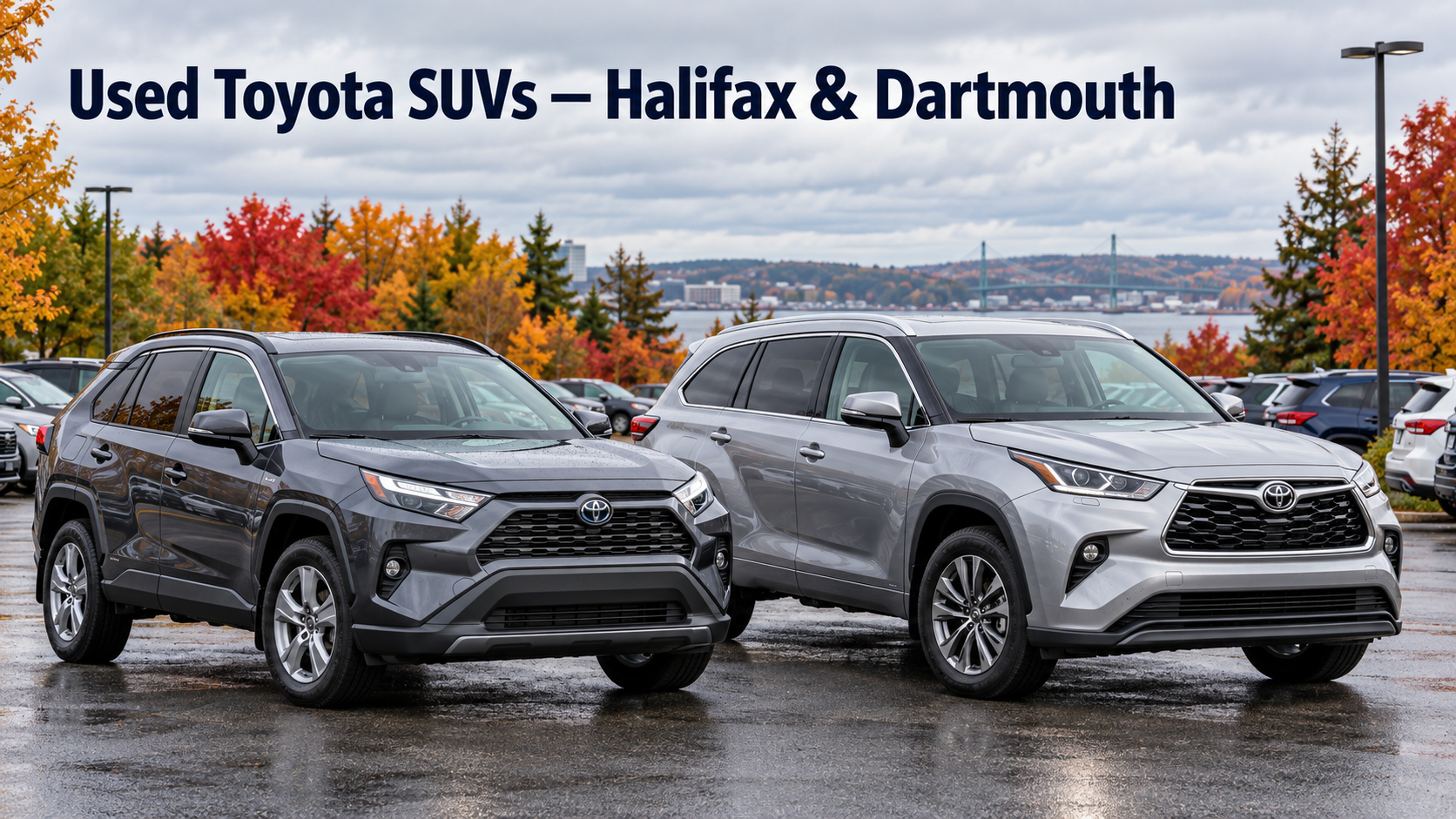
Used Toyota SUVs in Halifax: RAV4, Highlander, Corolla Cross or 4Runner?
They start in the cold, they handle our hills and snowbanks, and they hold their value when it's time to trade. The hard part isn't deciding on...
Read more
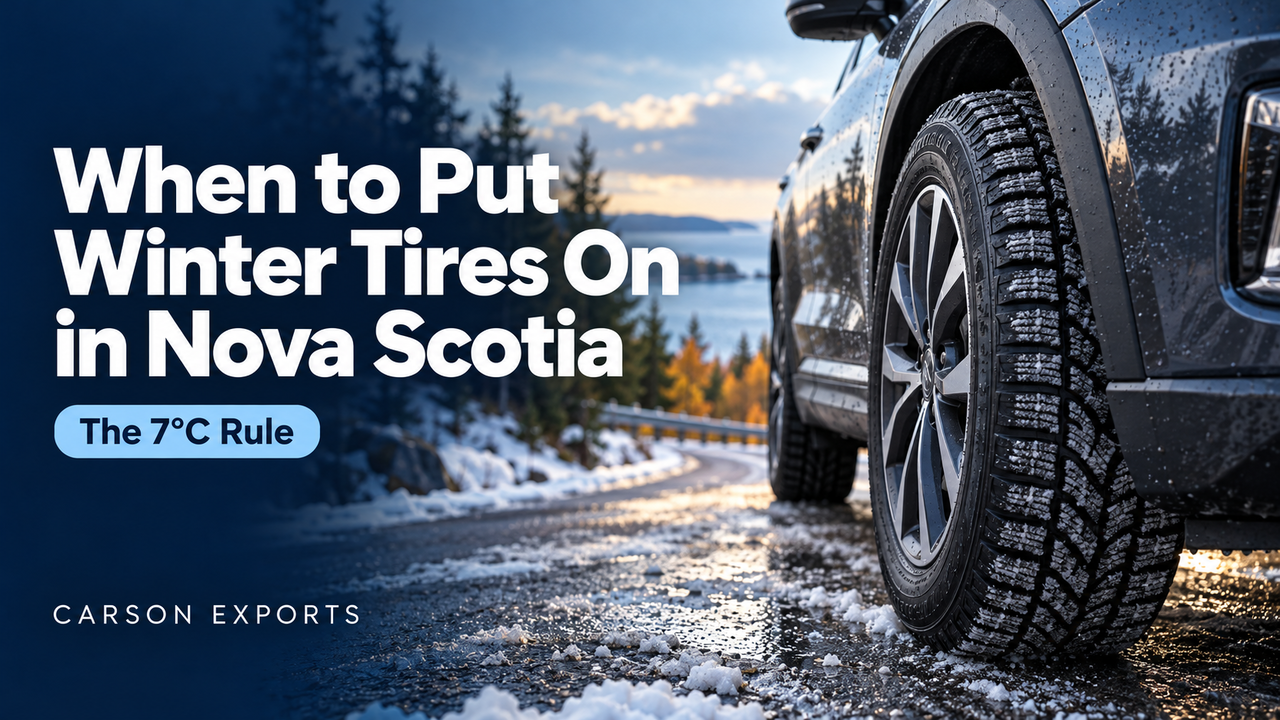
The best time to put winter tires on is when daytime temperatures stay below 7°C and for most of Nova Scotia, that's from late October to mid-November. Don't wait for the first snowfall: by then, every tire shop in HRM is booked solid and you're driving on summer rubber when it matters most.
Here's how to time it right, what to know about winter tires in Nova Scotia, and how to get your swap booked at our Tire Centre on Windmill Road in Dartmouth.
All-season and summer tires are made from rubber that starts to stiffen once it gets colder than about 7°C. Stiff rubber doesn't grip well, so your car takes longer to stop and slides more easily in corners and even on dry pavement.
Winter tires use a softer rubber that stays flexible in the cold. They also have deeper tread and lots of small cuts (called sipes) that bite into snow, slush and ice.
So the 7°C rule is simple: once the temperature is regularly below 7°C, winter tires grip better than all-seasons. You don't need snow on the ground for them to make a difference.
In Halifax, Dartmouth and the rest of HRM, overnight temperatures usually start dipping below 7°C in October, and the first snow often shows up in November. That makes late October to mid-November the sweet spot for most drivers.
A few things can move your timing earlier:
If you're not sure, earlier is safer than later. Winter tires on a cool, dry October day are fine. Summer tires on a slushy November morning are not.
Winter tires aren't required by law in Nova Scotia, unlike Quebec, where they're mandatory. But just because you're not required to have them doesn't mean you don't need them. Between freezing rain, wet snow, black ice and steep hills, Nova Scotia winters are hard on tires that aren't built for the cold.
If you're thinking about studded tires, Nova Scotia allows them from October 15 to May 31. Most drivers in the city do well with good studless winter tires, but studs can help if you deal with a lot of ice on rural roads.
Look for the three-peak mountain snowflake symbol on the sidewall. That's how you know a tire meets the standard for severe snow conditions.
All-weather tires are a middle ground. You can leave them on year-round, and they carry the same mountain snowflake symbol. They're a decent choice if you mostly drive in the city and can stay home on the worst storm days.
But a dedicated winter tire still has the edge on ice and in deep snow. If you commute early, drive outside HRM or want the most grip possible, winter tires are the better pick. We explain the differences in more detail in our guide to all-season vs all-weather vs winter tires.
Yes. All-wheel drive helps you get moving in snow, but it doesn't help you stop or turn. That comes down to your tires. A front-wheel-drive car on four good winter tires will stop shorter on ice than an AWD SUV on worn all-seasons.
AWD plus winter tires is the best of both. Our AWD vs FWD in Nova Scotia guide breaks down when AWD is worth it.
Before you put last year's set back on, check three things:
Not sure? Bring them in and our team will take a look when we do your swap.
Use the same 7°C rule in reverse. Once daytime temperatures stay above 7°C, usually sometime in April in Nova Scotia it's time to switch back. Soft winter rubber wears quickly on warm pavement. If you run studded tires, they have to be off by May 31.
Our Tire Centre in Dartmouth can take care of everything:
Need new tires? Request a quick tire quote online. Already have your set? Book your service appointment or call our service team at 1-833-706-6020. It's also worth checking our current service specials before you book.
We're at 550 Windmill Road in Dartmouth. Service is open Monday to Friday, 8 a.m. to 5 p.m.
Thinking about a vehicle that's better built for winter? Browse our used SUV inventory or read our guide to buying a used SUV in Halifax.
No. Once temperatures are regularly below 7°C, winter tires grip better than all-seasons. In most of Nova Scotia, that happens in mid-to-late October.
No. Always put winter tires on all four wheels. Mixing tire types can make your vehicle hard to control, especially when braking or turning.
A little, if it's still warm. A couple of mild weeks won't make much difference, the bigger risk is waiting too long.
Yes. We offer tire storage, so your off-season set has a place to go. Ask about it when you book your appointment.
Used Toyota SUVs in Halifax: RAV4, Highlander, Corolla Cross or 4Runner?
They start in the cold, they handle our hills and snowbanks, and they hold their value when it's time to trade. The hard part isn't deciding on...
Read more
Buying a Used SUV in Halifax: How to Pick the Best One for Nova Scotia
Shopping for a used SUV in Halifax can get confusing quickly. Do you need all-wheel drive, or will front-wheel drive with good winter tires do the...
Read more
Half-Ton vs Heavy-Duty Used Trucks | Dartmouth NS
Picking the Right Truck Size Is the Biggest Decision You'll Make Most people shopping for a truck start with a brand. Ford or Chevy. Blue or red....
Read morePowered and developed by
