
Honda Civic Trims Explained: LX, EX, Sport, Touring, Si and Hybrid
The Honda Civic trim levels you'll see most on used lots in Canada are the LX, EX, Sport and Touring from 2022 to 2024, plus the...
Read more
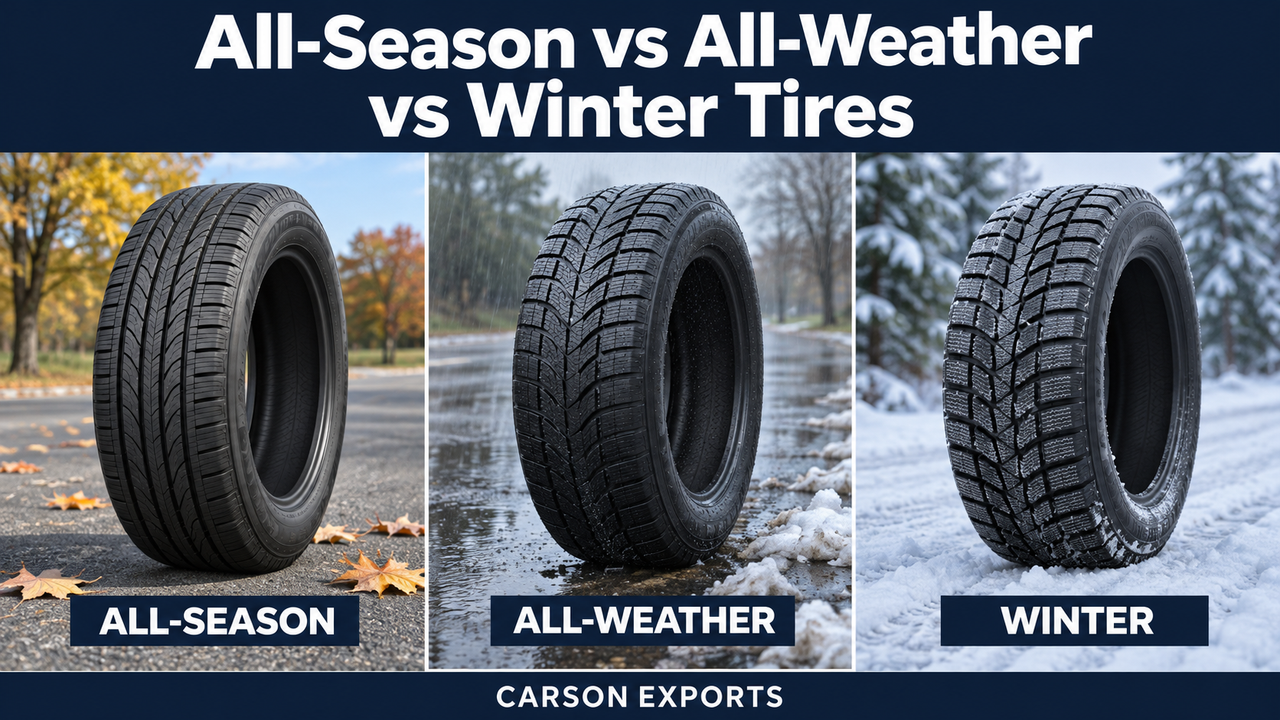
All-season vs all-weather tires comes down to one thing: all-weather tires are built for winter, and all-season tires are not. All-weather tires carry the snowflake symbol and can stay on all year. All-seasons start to lose grip once it drops below about 7°C. Dedicated winter tires still grip best on ice and deep snow. Here's how all three compare in a Nova Scotia winter, and how to pick the right set for the way you drive.
| All-season | All-weather | Winter | |
|---|---|---|---|
| Best temperature range | Above about 7°C | Year-round | Below about 7°C |
| Snowflake symbol | Usually no | Yes | Yes |
| Grip in snow and slush | Fair to poor | Good | Best |
| Grip on ice | Poor | Fair | Best |
| Summer driving | Best: quiet, long-lasting | Good, but wears faster in heat | Not recommended |
| Seasonal swap needed? | Yes, in winter | No | Yes, twice a year |
The names sound alike, but they're built for different jobs.
All-season tires are made for spring, summer and fall. Their rubber gets stiff once it's colder than about 7°C, so they take longer to stop and slide more easily on cold pavement, even with no snow on the ground. They're quiet and long-lasting in warm weather, which is why most new and used vehicles come with them.
All-weather tires use a softer rubber that stays flexible in the cold, plus a tread pattern with more biting edges for snow and slush. They carry the three-peak mountain snowflake symbol, the same severe-snow rating winter tires have. You can leave them on year-round, but they wear a bit faster than all-seasons in summer heat.
For pure winter grip, winter tires win. Their rubber is even softer, and their deeper tread and many small cuts (called sipes) grip better on ice, packed snow and freezing rain. That matters on a 6 a.m. commute over the bridges, on hills in Dartmouth and Bedford, or on roads outside HRM that don't get plowed right away.
All-weather tires are the middle ground. They're much better in winter than all-seasons and save you the twice-a-year swap, but they give up some ice grip compared with a dedicated winter tire.
For many city drivers, yes. All-weather tires are a solid choice if you:
Choose dedicated winter tires if you:
All-season tires are the one choice we don't recommend for a Nova Scotia winter.
Winter tires aren't required by law in Nova Scotia, unlike Quebec. Studded tires are allowed from October 15 to May 31. Not being required to have them doesn't mean you don't need them, though. Between wet snow, freezing rain and black ice, an all-season tire is the weakest choice for our winters.
Not sure when to make the switch? Our guide to when to put winter tires on in Nova Scotia explains the 7°C rule and the best timing for HRM.
Yes. All-wheel drive helps you get moving in snow, but it doesn't help you stop or turn. That comes down to your tires. An AWD SUV on all-season tires will still slide on ice. Our AWD vs FWD in Nova Scotia guide explains when AWD is worth it.
Our Tire Centre on Windmill Road can help you choose between all-weather and winter tires for the way you drive, then take care of:
Need new tires? Request a quick tire quote online. Already have your set? Book your tire swap or call our service team at 1-833-706-6020. Check our current service specials before you book.
We're at 550 Windmill Road in Dartmouth. Service is open Monday to Friday, 8 a.m. to 5 p.m.
Shopping for a vehicle that's ready for winter? Browse our used SUV inventory or read our guide to the best used AWD SUVs in Halifax.
Yes. That's what they're made for. They carry the snowflake symbol for winter and work fine in summer, though they wear a little faster in hot weather.
Not in a Nova Scotia winter. Their rubber stiffens below about 7°C, and most don't carry the snowflake symbol.
Close, but not quite. They're good in snow and slush, but dedicated winter tires still grip better on ice and in deep snow.
The three-peak mountain snowflake symbol means the tire has passed a standard test for severe snow. Winter tires and all-weather tires carry it. Most all-season tires don't.
Once daytime temperatures stay above about 7°C, usually in April here. Studded tires must be off by May 31.
Honda Civic Trims Explained: LX, EX, Sport, Touring, Si and Hybrid
The Honda Civic trim levels you'll see most on used lots in Canada are the LX, EX, Sport and Touring from 2022 to 2024, plus the...
Read more
Hyundai Tucson Trims Explained: Which Used Tucson Fits You?
The main Hyundai Tucson trims in Canada are the Essential, Preferred, Preferred with Trend Package and N Line, plus the Hybrid models at the top....
Read more
Halifax Roads Don’t Care What You Drive… Until They Do.
If you've driven through a few Nova Scotia winters, you already know how unpredictable the roads can be. One day it's snowing, the next it's...
Read morePowered and developed by
