When to Put Winter Tires On in Nova Scotia (2026 Guide)
The best time to put winter tires on is when daytime temperatures stay below 7°C and for most of Nova Scotia, that's from late October to...
Read more
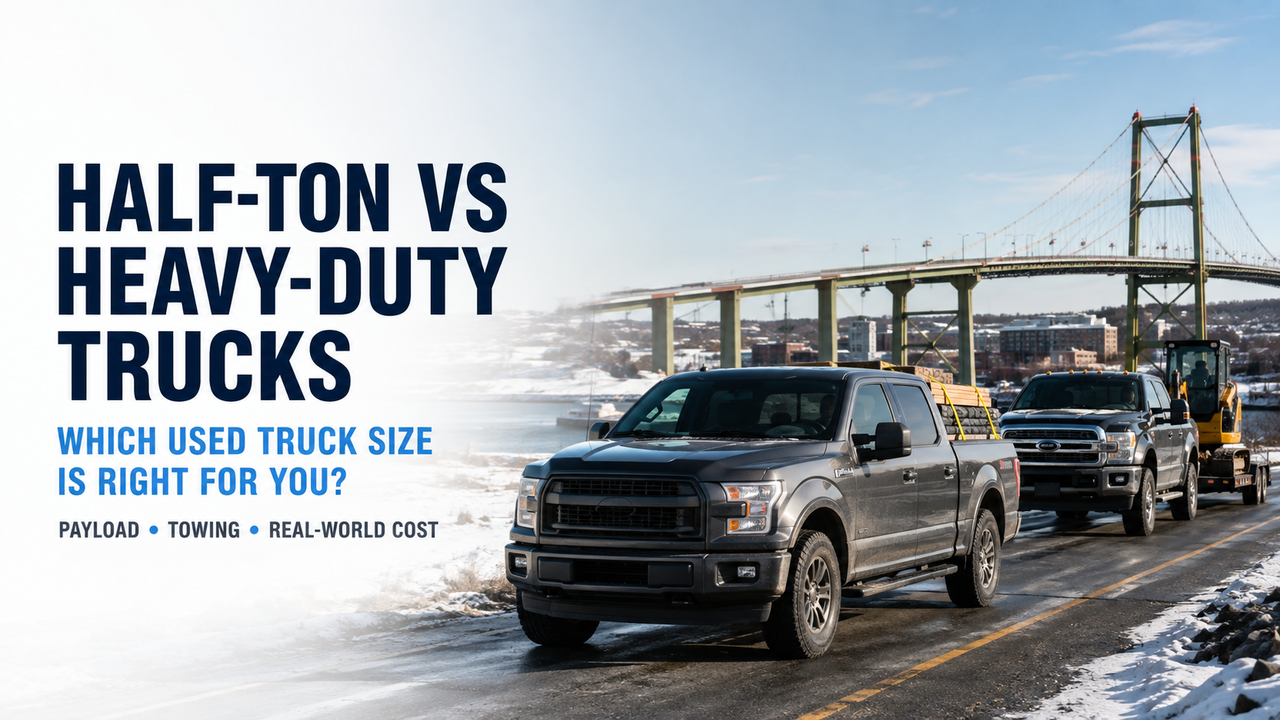
Most people shopping for a truck start with a brand. Ford or Chevy. Blue or red. But the question that actually matters is much simpler: how much weight do you need to move, and how often? Get that right and everything else falls into place. Get it wrong and you either buy way more truck than your life requires, or you buy one that struggles the first time you hitch up a trailer.
The half-ton vs heavy-duty used truck question comes up almost every week at our lot on Windmill Road. So let's break it down in plain language — no spec-sheet overload, just what these numbers mean when you're pulling a boat out of Eastern Passage or hauling shingles across the Macdonald Bridge.
The old names stuck around long after the math stopped being accurate. Here's the shorthand most Canadian buyers use today:
The names refer to old payload ratings from decades ago. A modern half-ton can often carry more than a "one-ton" from the 1970s. What matters now are the two numbers on the door sticker: payload (what you can put in the truck) and towing capacity (what you can pull behind it).
Towing capacity gets all the attention. Payload is the number that quietly ruins plans.
Payload includes everything you add to the truck: passengers, tools, gear in the box, a tonneau cover, and — this is the part people miss — the tongue weight of your trailer. A travel trailer that weighs 7,000 lb usually puts 700 to 1,000 lb straight down on the hitch. Add three people and a load of firewood and a half-ton with a 1,500 lb payload rating gets tight in a hurry.
A quick reality check before you shop:
If you're anywhere near the limit, step up a size. If you're at half the limit, you're likely fine in a half-ton and you'll save money at the pumps every week.
For most people in HRM, a half-ton is the right answer. It handles the weekend runs to Kent, tows a fishing boat or a small camper, fits in a Dartmouth Crossing parking spot, and doesn't punish you on the daily commute.
A used Ford F-150 is the obvious starting point — it's the best-selling truck in Canada for a reason, and parts and service are easy to find anywhere in Nova Scotia. We currently have a 2022 F-150 on the lot, and you can browse the rest of the used Ford lineup anytime. On the Chevy side, our 2025 Silverado 1500 covers the same ground with a different feel behind the wheel — and our Silverado towing capacity guide has the numbers.
Choose a half-ton if you:
If you run a trade, tow a big fifth-wheel, or your truck is a tool before it's transportation, the heavier chassis pays for itself. A three-quarter or one-ton truck doesn't just tow more — it stops better under load, sits flatter, and holds up to years of weight without sagging.
Our 2021 Ford F-350 Super Duty is the kind of truck that makes sense for contractors running between Bedford, Sackville and Truro with a loaded trailer behind them. We covered that use case in detail in our piece on rugged used trucks for every job.
Go heavy-duty if you:
The tradeoff is real: worse fuel economy, a firmer ride when empty, and higher tire and brake costs. If you only tow twice a summer, that's a lot of money spent on capability sitting idle in the driveway.
Our roads and weather change the math a little. A few things worth thinking about before you sign:
Size also drives your monthly cost. Fuel, tires, insurance and maintenance all scale up with the truck, so look at the full picture rather than just the sticker — our post on budgeting beyond the sticker price lays it out clearly. If a work truck is going to help you earn, financing it properly matters too. We work with a wide range of credit situations through our financing team, and if your credit has taken a hit, MetroCredit second-chance financing exists for exactly that.
Honestly, the fastest way to settle this is to stand beside both. Sit in a half-ton, then sit in a Super Duty, and the answer usually becomes obvious in about five minutes. Our team won't push you into more truck than you need — that's a good way to lose a customer for life.
Browse our used truck inventory online, get a real number on your current vehicle with a free trade-in evaluation, or apply for financing in a few minutes.
Carson Exports is at 550 Windmill Road in Dartmouth, open Monday to Thursday 9AM–7PM, Friday 9AM–6PM and Saturday 9AM–5PM. Call 1-833-706-3093 or contact us here and we'll help you figure out the right size truck for the work you actually do.
When to Put Winter Tires On in Nova Scotia (2026 Guide)
The best time to put winter tires on is when daytime temperatures stay below 7°C and for most of Nova Scotia, that's from late October to...
Read more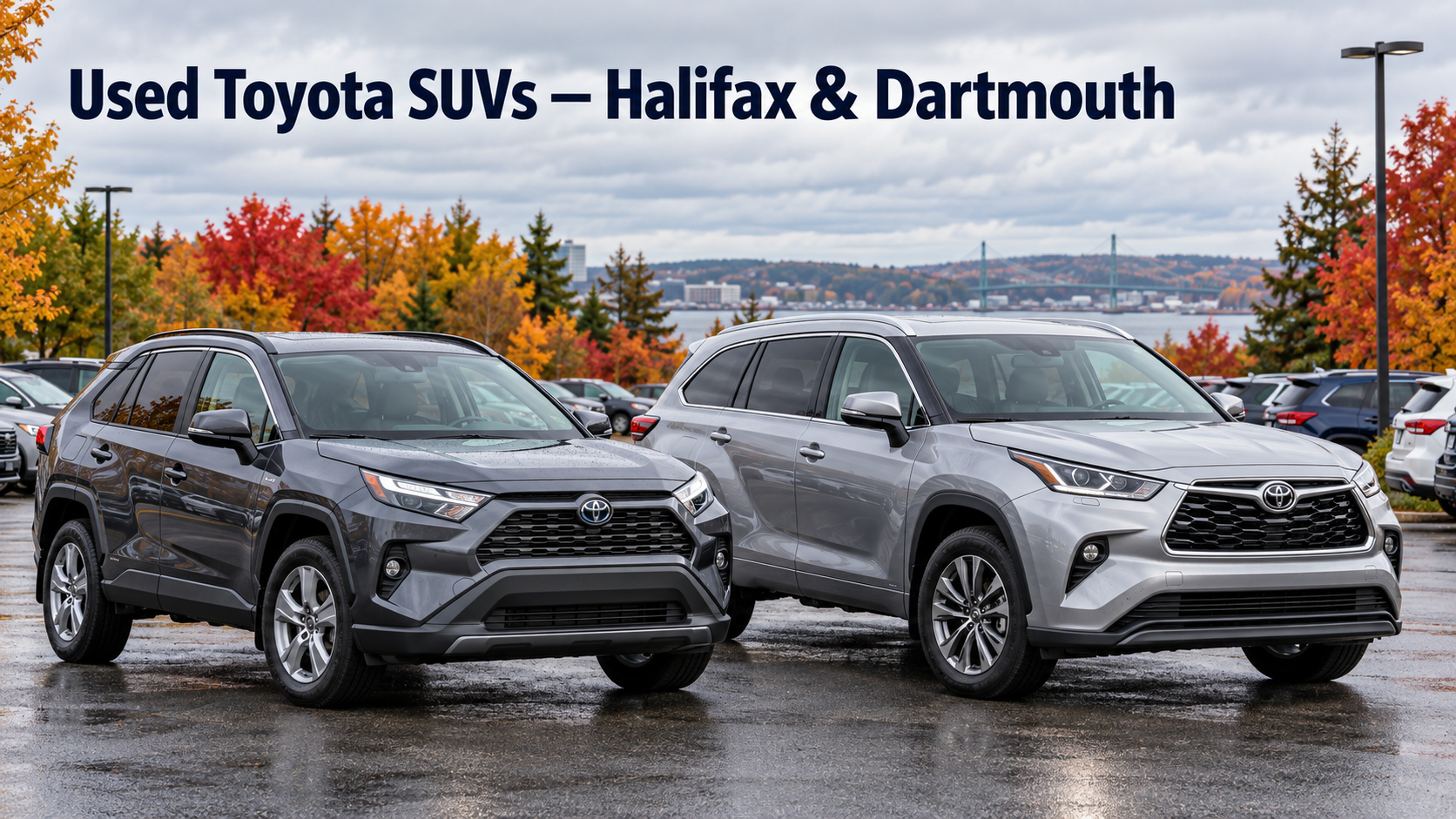
Used Toyota SUVs in Halifax: RAV4, Highlander, Corolla Cross or 4Runner?
They start in the cold, they handle our hills and snowbanks, and they hold their value when it's time to trade. The hard part isn't deciding on...
Read more
Buying a Used SUV in Halifax: How to Pick the Best One for Nova Scotia
Shopping for a used SUV in Halifax can get confusing quickly. Do you need all-wheel drive, or will front-wheel drive with good winter tires do the...
Read morePowered and developed by
